
Conditions we help with
Getting back into exercise after 40
Starting again after years away is harder than starting the first time, and the reason is simpler than most people think. This page explains what is actually happening in those first weeks, what is normal, and where treatment fits in.
- Published in the British Journal of Sports Medicine
- Practising since 2007
- Level 4 SMA therapists
- Treated Olympic and Commonwealth athletes
The short answer
Can massage help when returning to exercise?
Returning to exercise after 40 usually means more aching, a slower build than you remember, and a body that adapts well but takes a little longer to do it. Massage may help with the muscular tightness and soreness that come with a new training load, and it can be useful for keeping you comfortable enough to stick with it. It does not prevent injury and it does not speed recovery in any measurable way, so it is best treated as support for the training rather than something that replaces sensible progression.
Where it tends to help
The muscular tightness and soreness that follow a new training load, which is often what makes the first few months feel harder than they need to.
When to see a GP first
Pain that came on suddenly and severely, pain after a fall, or pain with numbness, weakness or fever needs a medical opinion before a treatment table.
What has changed
Why starting again feels harder than starting did
If training felt easier when you were twenty, that is not your imagination and it is not a sign that something is wrong. A number of things have genuinely changed, and none of them are about willpower.
The clearest one is muscle mass. Adults lose muscle gradually from around their thirties onwards, and the rate tends to increase later. If you have been away from training for several years, you are starting from a lower base than the last time you trained, even if your weight and your appearance have not changed much. That means the same session you used to do comfortably is now a bigger ask than it was.
The second is recovery. Connective tissue, including tendons and the tissue around joints, adapts more slowly than muscle does at any age, and more slowly still as you get older. Training creates the stimulus, and recovery is when the adaptation actually happens. Where you might once have trained hard on consecutive days and felt fine, the same pattern now tends to leave you flat and sore. This is why the build has to be slower than the one you remember, not because you have less capacity for effort.
The third is the thing people least expect: your nervous system has partly forgotten how to do what you used to do well. Lifting a weight or running efficiently is a skill as well as a physical capacity, and those patterns fade with disuse. This is why people who were once strong find their coordination feels off before their strength does, and why it comes back faster than they expect once they start.
What has not changed is that the body still adapts. Training still works, and the response to it is still there. What has changed is the timeline, and understanding that is usually the difference between someone who builds back successfully and someone who goes too hard in week two, gets sore, and stops.
The first few weeks
Why everything aches, and what is normal
The aching in the first weeks is the thing people most often take as a warning sign, and it usually is not one.
The soreness you get a day or two after training is a normal response to unfamiliar work, and it is not a sign of damage. It is at its worst between roughly twenty four and seventy two hours afterwards, it eases with gentle movement rather than rest, and it fades as the same work becomes familiar. What matters more than the soreness itself is the pattern. If it appears after a new activity and settles within a few days, that is the ordinary process. If it is sharp rather than achy, if it is in a joint rather than a muscle, if it is one sided when the activity was not, or if it is not settling, that is worth getting looked at.
Where the first week tends to go wrong is volume rather than intensity. Most people who have been away for a while do not overdo the weight they lift. They overdo how much they do of it. Three sessions in the first week when the plan says one, an hour when twenty minutes was plenty, or a return to the exact routine you were doing years ago. The body copes with hard work, but it copes far less well with a sudden jump in how much of it there is.
There is also a specific trap worth naming. It is very common to feel fine during and immediately after a session, decide the body has remembered everything, and go again the next day. The soreness arrives on day two, and by then the decision has already been made. The sessions that cause trouble are rarely the ones that felt hard at the time.
A useful rule for the first month is to finish each session feeling as though you could have done more. It feels unsatisfying, particularly if you used to train hard, and it is what almost everyone who successfully returns does.
Practical approach
How to build back without stopping again
None of this is complicated. It is simply slower than most people want it to be, and that is the part worth accepting.
Start below what you think you can do
Not at the level you think is achievable, and certainly not at the level you used to train at. Start where you are confident you could repeat the session twice more in the same week without difficulty. It will feel too easy. That is the point, because the alternative is a week of soreness followed by a fortnight off.
Increase one thing at a time
Volume, intensity and frequency should not all go up together. Pick one, raise it modestly, and hold the others steady for a couple of weeks before moving another. Where people run into trouble is usually when a good week convinces them to increase everything at once.
Protect your recovery deliberately
Recovery is where the adaptation happens, and at this stage it needs more room than it used to. Sleep matters most, and it is the thing most often sacrificed. Eating enough protein and not training hard on consecutive days if you are new back are the other two that make a difference. This is not caution for its own sake. It is what allows the training to work.
Expect a bad week, and do not quit in it
Progress is not linear, and there will be a week where everything feels heavier than the week before. That is normal and it does not mean the approach has failed. The people who get back into training are usually not the ones who avoided bad weeks, they are the ones who carried on through them at the same sensible level rather than stopping or doubling down.
Get the technique looked at early
If you are returning to lifting, a session or two with a coach or instructor is worth more than most equipment. Your strength may have held up better than your movement patterns, and small technique issues that caused nothing at twenty can cause problems at forty. If you are returning to running, a gait assessment is a reasonable equivalent. If you are not sure where to start with either, raise it at your first appointment and we will point you in the right direction.
The honest picture
Where treatment fits, and how often
What it cannot do
Massage does not prevent injury. That is the claim most often made about it for people returning to training, and the evidence does not support it. It does not make you recover faster in any measurable way, and it does not replace sleep, food or sensible progression. If someone tells you that regular sports massage will keep you injury free, treat that with some scepticism. The things that actually reduce your risk are building up sensibly and giving the body enough recovery.
What it may help with
What it can do is ease muscular tightness and help you feel more comfortable, particularly in the weeks when a new training load has left you stiff. Muscles that are working harder than they have in a while tend to tighten, and that tightness can make training feel worse than it needs to. Easing it does not make you fitter, but it can make the process more comfortable, and comfort matters more than it sounds when you are trying to build a habit.
The more useful thing treatment may offer is support with sticking at it. Most people who fail to return to training do not fail because of injury. They stop because it felt bad, or because the soreness convinced them something was wrong, or because they went too hard and could not face the next session. A therapist who can tell you the difference between ordinary soreness and something worth checking is worth having in those first months, quite apart from any hands on work.
How often treatment makes sense
The honest answer is less often than most people expect. For someone building back up over the first few months, a session every four to six weeks is usually plenty, and many people need fewer than that. There is no benefit in coming weekly to a body that is simply adapting to a new load, and we would rather tell you that than sell you a course.
Where it becomes more useful is when a specific area is holding you back, or when you are on a high training load and the tightness is not clearing between sessions. In those cases a short run of appointments closer together makes sense, followed by a return to occasional visits once things settle. If you are unsure, book once and we will give you an honest view at that appointment rather than a package.
What to expect here
What treatment looks like at the practice
The assessment is mostly about what you are doing rather than what is wrong. We will ask what you have come back to, how long you were away, how many sessions a week you are managing, and what feels different from how it used to feel. We will also ask what specifically is tight, because people returning to training usually know exactly which areas are complaining. If anything you describe sounds like an injury rather than adaptation, we will say so and treat it accordingly.
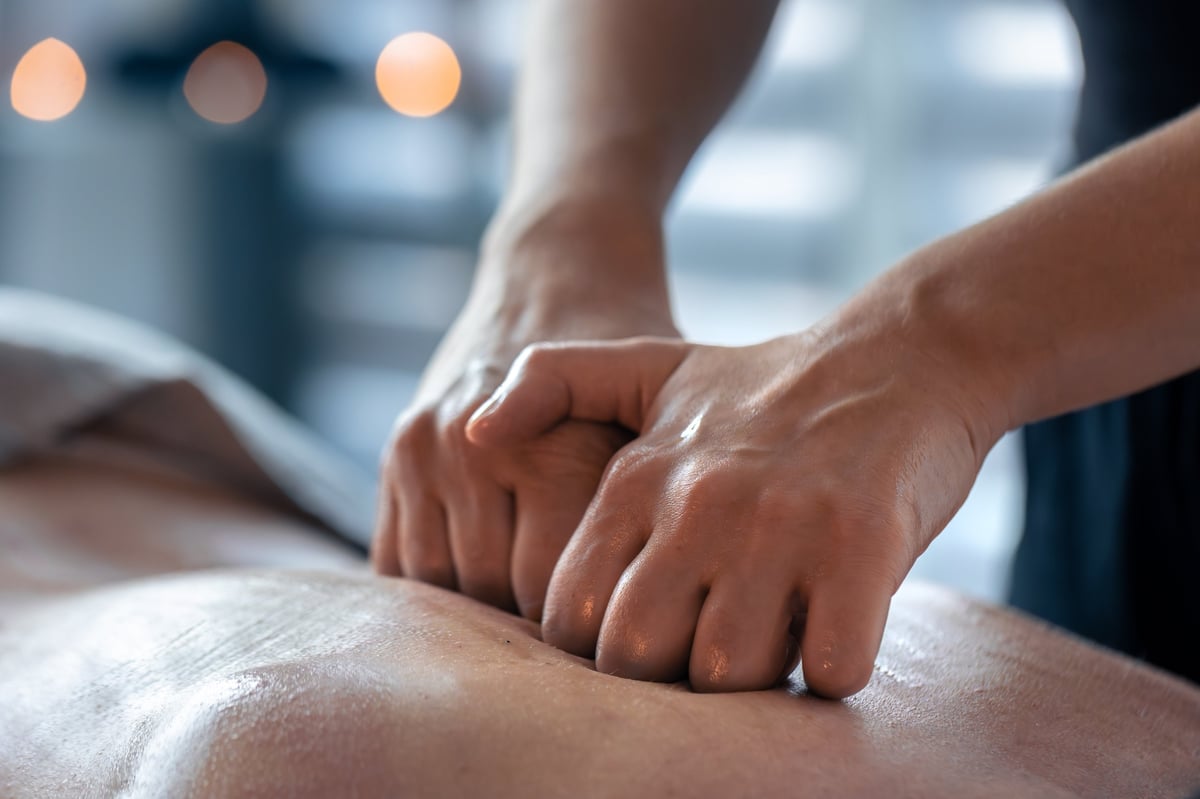
The treatment follows what the training is asking of you. If you are running, that usually means the calves, hamstrings, glutes and lower back. If you are lifting, it is often the shoulders, upper back, hips and thighs. We work on the areas that have tightened rather than following a fixed routine, and we will usually give you more pressure than you expect, because this is tissue that is adapting to load rather than tissue that is injured.
You will also get a view on whether what you are feeling is ordinary. A lot of the value in the first few months is simply being told that the soreness in week three is normal, that the tightness in your calves is what happens when you start running again, and that you are not doing damage. Where something does need attention, that is when treatment becomes more than reassurance.
This page is reviewed by senior therapist Richard Clarke. The treatment used depends on what you are doing. Sports massage is a targeted half body treatment that suits a specific area or a training load you want to stay on top of. Where you are stiff all over rather than in one place, or where you simply want to feel less battered at the end of a heavy week, relaxing massage is the gentler option. If you have not been before, our page on your first visit explains what happens when you arrive.
Important
Soreness, or something to get checked
Most of what you feel in the first months of training again is ordinary adaptation. There is a smaller set of things that are not, and knowing the difference is what allows you to keep going with confidence rather than stopping at the first twinge.
A sudden sharp pain during a movement
Soreness after training is expected. A sharp pain at the moment of a movement, particularly one you can point to precisely, is a different thing and is worth having assessed before you train again.
Pain in a joint rather than a muscle
Muscle soreness is normal. Pain inside a joint, or pain that feels like it is in the bone, is not the same picture and needs checking.
Swelling, heat or redness around a joint
Any of these need medical assessment rather than massage, particularly if they came on quickly.
Pain that is getting worse rather than easing
Ordinary soreness peaks and then settles. Pain that is increasing over days, or that is worsening with each session rather than improving, needs looking at.
Numbness, tingling or weakness
Symptoms that travel down an arm or a leg suggest a nerve is involved and need assessment rather than treatment.
A limb that gives way or cannot bear weight
A joint that buckles, or a leg you cannot put weight on, needs medical assessment.
You have a heart condition, or you have been told to be careful about exercise
This is not about your muscles. If you have an existing condition or have been advised to be cautious about exercise, check with your GP before starting again rather than after.
What to do
- Call 999 if you get chest pain, severe breathlessness, or you faint during or after exercise.
- Go to A&E or call 111 if a joint is hot, red and swollen, or if you cannot bear weight on a limb after an injury.
- See your GP if pain is getting worse rather than easing, if it is in a joint, or if you have numbness, tingling or weakness. If you have an existing health condition, check with your GP before starting a new training programme.
Where none of those apply, and what you are feeling follows the ordinary pattern of soreness after new work that settles within a few days, massage is a reasonable thing to try for the comfort. If we assess you and conclude that something needs medical investigation or a different kind of help, we will say so plainly and refer you on. That is a normal part of the job and not a disappointment.
Questions
Questions we get asked
Why is everything so much harder than it used to be?
Three things have changed. You have lost some muscle mass, which happens gradually from your thirties onwards and faster if you have been away from training. Your connective tissue adapts more slowly than it did, so recovery takes longer. And your nervous system has partly forgotten the movement patterns, so coordination fades before strength does. None of that is about willpower, and all of it comes back with consistent training.
How sore is too sore?
Ordinary soreness appears a day or two after training, is achy rather than sharp, is in muscles rather than joints, and eases within a few days. It also improves with gentle movement. What is not ordinary is sharp pain at the moment of a movement, pain inside a joint, swelling, or soreness that is still getting worse rather than settling. If it is one of those, get it looked at rather than training through it.
Can I train through the soreness?
Usually yes, at a reduced level, and gentle movement generally helps rather than harms. What you should not do is train the same muscles hard again while they are still sore from the last session, which is the most common way people derail their first month back. Reduce the volume, keep moving, and give it a day or two.
How quickly should I be increasing what I do?
More slowly than feels satisfying. Increase one thing at a time, either volume, intensity or frequency, and hold the others steady for a couple of weeks. A useful test for the first month is to finish each session feeling you could have done more. It feels wrong if you used to train hard, and it is what allows you to still be training in three months.
Does massage prevent injury?
No, and we would not claim it does. That is the claim most often made about massage for people returning to training and the evidence does not support it. The things that genuinely reduce your risk are building up sensibly, recovering properly and addressing technique. What massage can do is ease tightness so you feel more comfortable, which can make it easier to stay consistent.
How often should I have treatment while I am building back up?
Less often than most people expect. For someone building back over the first few months, one session every four to six weeks is usually plenty, and many people need fewer. There is no benefit in weekly treatment for a body that is simply adapting to a new load. Where a specific area is holding you back or a heavy training block is not clearing between sessions, a short run of appointments closer together makes more sense.
Should I get my technique checked?
If you are returning to lifting or running, yes, and it is often worth more than any equipment. Your strength may have held up better than your movement patterns did, and small technique issues that caused nothing at twenty can cause problems now. A session or two with a coach, or a gait assessment if you run, is a sensible investment in the early months. If you are unsure where to find either, mention it at your first appointment and we will suggest something.
I have a health condition. Can I still start training again?
That is a question for your GP rather than for us. If you have a heart condition, diabetes, high blood pressure or anything else that might affect exercise, check with your doctor before starting rather than after. If you are cleared to train, we are happy to work alongside whatever you are doing.
Where joint aching is part of why you are building back carefully, joint pain during menopause covers that picture. You can also see the full list of conditions we help with.
Areas we cover
Where we help people get back to training
People rebuilding their training come to us from across the area, runners and rugby players alike. These are the areas we cover in detail.
Clients travel to us from all over the surrounding area, from the city and from the towns and villages around it. If you are not sure whether we cover where you are, ring us and ask.
Main areas we cover
Also covered
Skewen, Birchgrove, Clydach, Glais, Trebanos, Rhos, Neath Abbey, Cadoxton, Cimla, Briton Ferry, Gorseinon, Gowerton, Fforestfach, Loughor, Pontardawe, Pontarddulais, Killay, Ammanford, Burry Port.
Ready to book your session?
Choose a time that suits you, or call us and we will find one that works.