
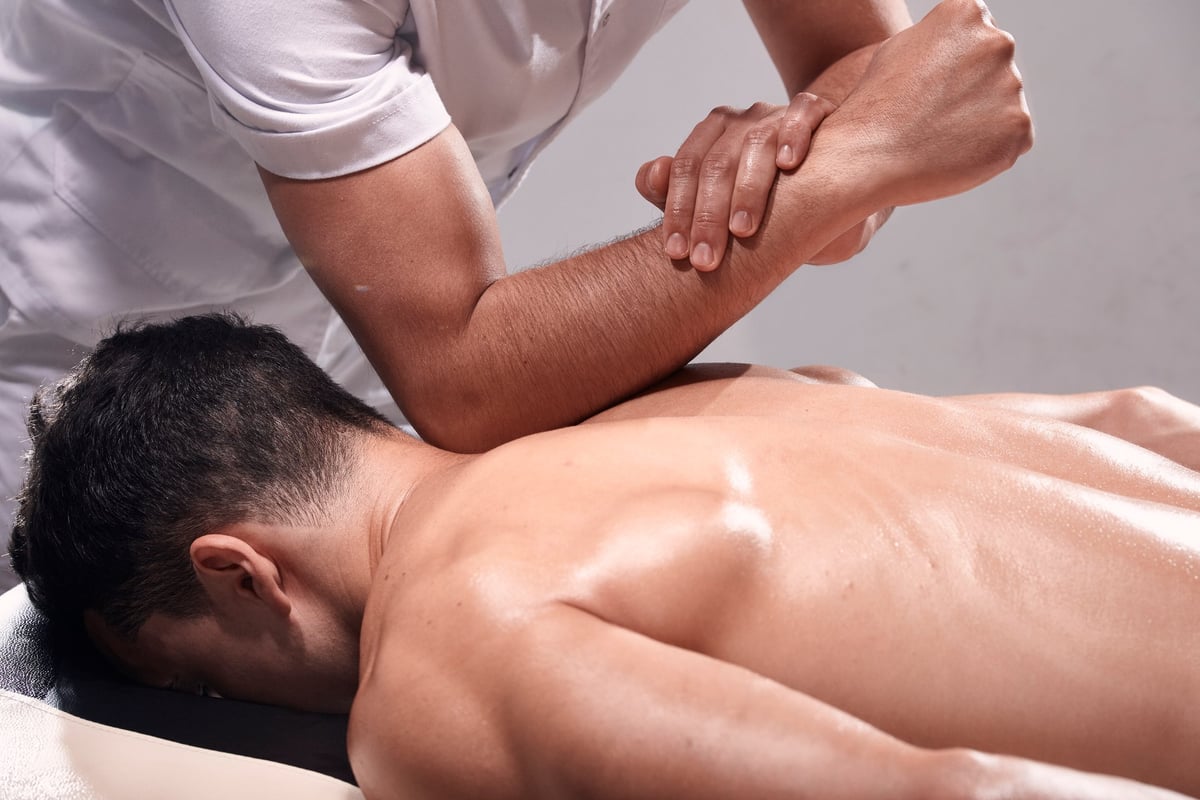
Full body, 80 to 90 minutes
Deep tissue massage in Swansea
A whole body treatment that works into the deeper layers of muscle and connective tissue, from head to toe, in a single session.
80 to 90
minutes, full body
£75
first visit, £65 follow up
Head to toe
all major muscle groups
The treatment
A full body treatment, head to toe
Deep tissue massage works slowly. Rather than moving quickly across the surface, the therapist uses steady, deliberate pressure to reach the deeper layers of muscle and the connective tissue around them. Those layers are where tightness tends to settle and stay, sometimes for months or years, long after the original cause has passed.
The full body treatment runs for 80 to 90 minutes and covers the major muscle groups from head to toe: the neck and shoulders, the back, the hips and glutes, the legs and the arms. Because it is a whole body session, it is the right choice when the problem is not in one tidy place. Tension in the lower back rarely exists on its own, and a shoulder that will not settle is often being pulled out of shape by something further down.
Most clients describe it as thorough rather than relaxing in the conventional sense. That is deliberate. The aim is not an hour of pleasant sensation, it is to make a genuine difference to how you move in the days afterwards.
Being honest about it
Yes, parts of it can be uncomfortable
It would be dishonest to promise otherwise. Working into muscle that has been tight for a long time involves sustained pressure, and you will feel it. Some clients describe a strong ache, others a burning sensation on the tightest spots, and the sensation can be intense for short periods.
There is a real difference between useful discomfort and pain, and the therapist is watching for it. Pressure should never make you hold your breath, tense against the work or want to get off the table. If it does, that is too much, and saying so is not complaining. A muscle that is guarding cannot release properly, so the honest feedback that something is too much is actually what makes the treatment work. You should expect to feel the work clearly, and to be able to talk through it throughout.
Afterwards it is common to feel tender for a day or two, much like after a hard training session. Some clients find the area feels bruised, though visible marking is uncommon. That tenderness usually settles quickly, and many clients notice the benefit most clearly on the second or third day, once the initial soreness has passed.
A strong ache
Steady, sustained pressure on tight tissue. Uncomfortable, but you can breathe and talk through it.
Nothing sharp
No sharp, shooting or electric sensations. If you feel any of those, say so immediately.
Your call
Pressure is adjusted continuously. You are in charge of how deep the session goes.
The techniques
What is actually happening
Nothing mysterious. Each technique exists for a reason, and most people find it helps to know what it is for.
Slow strokes with sustained pressure
The therapist uses a flat hand, forearm or elbow to apply steady pressure along the length of a muscle. Working slowly is what allows the deeper layers to respond rather than simply tense up against the pressure.
Sustained pressure on specific points
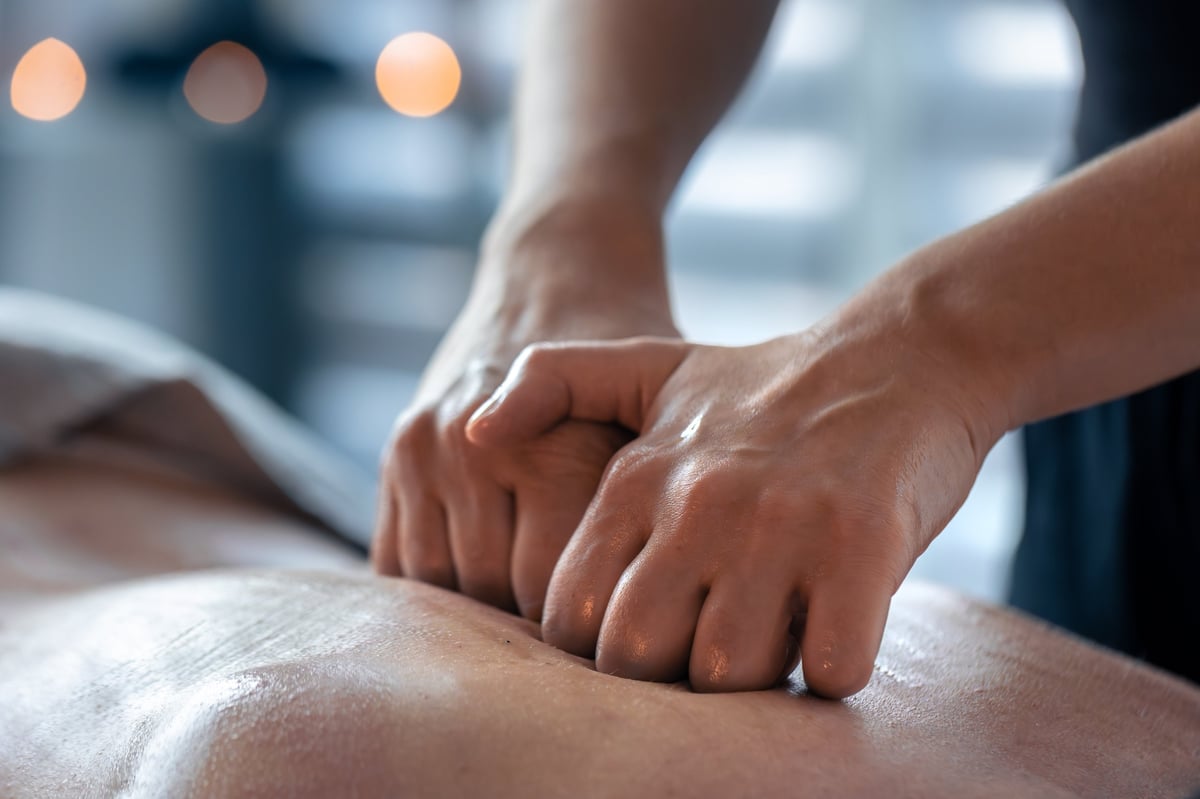
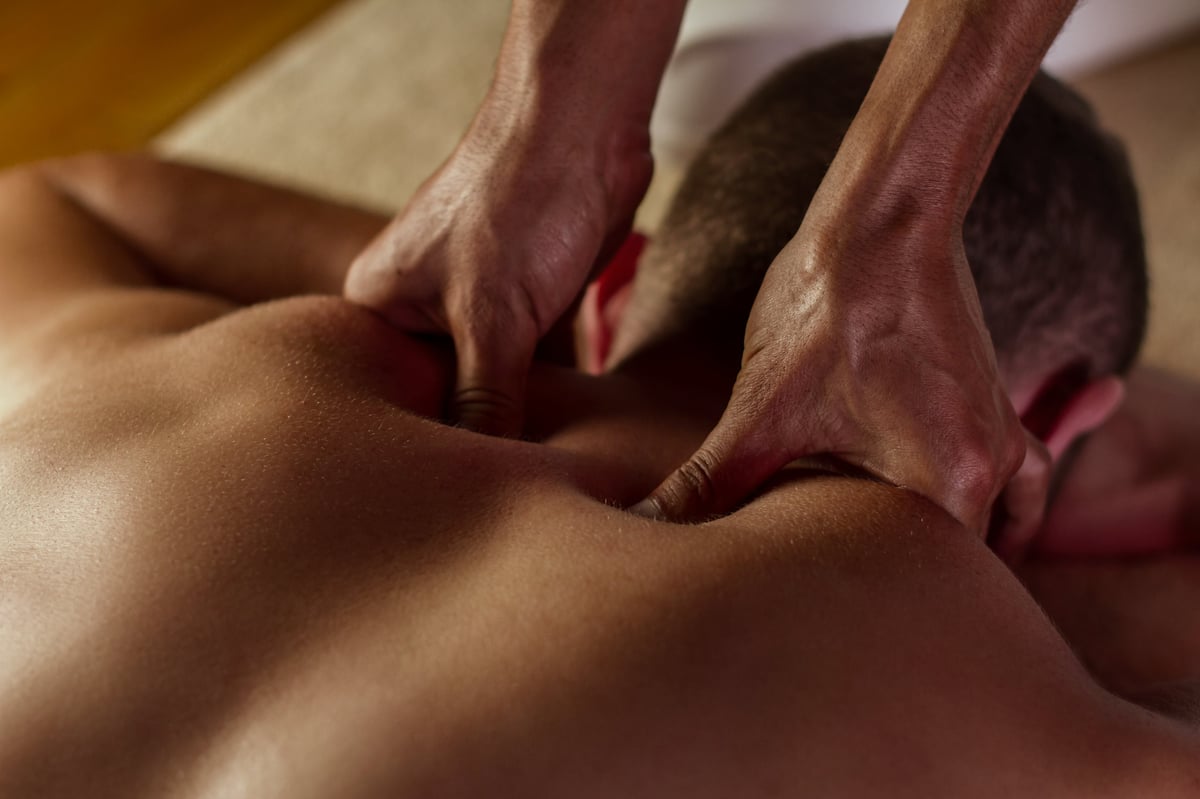
When a knot is found, the therapist holds pressure there rather than rubbing over it. Holding is what encourages the tissue to release. This is often the part clients find most intense, and the part that makes the most difference.
Working across the fibres
Muscle is made of fibres that run in a direction. Moving across them, rather than along them, helps break down adhesions where tissue has become stuck together.
Stretching as part of the work
Gentle movement and stretching are built into the session, to check how a muscle responds under load and to help it hold the release rather than tightening straight back up.
Who it suits
A good fit if this sounds like you
- You have tension that has been there for weeks or months and has not shifted.
- You are happy with firm pressure and want real work done, not a light rub.
- Your problem is not in one place, and things seem to feed into each other.
- You train or work hard and want a thorough reset rather than a quick fix.
- You have tried gentler massage and found it did not get deep enough.
Choose something gentler instead if
Deep tissue is not right for everyone
If deep pressure makes you tense up or brace, the treatment will not do what it is meant to. In that case the relaxing massage is a better starting point, and you can move towards firmer work over time.
Please check with your GP before booking if you are pregnant, have recently had surgery or an injury that is still healing, have a condition affecting your blood or circulation, are taking blood thinning medication, or have any ongoing medical condition you are unsure about. This is not a list of reasons you cannot be treated, it is a list of reasons to have a conversation first.
If you are unwell with a fever or an infection, please rearrange your appointment.
Before your appointment
The practical details
Price
- £75 for your first visit
- £65 for each follow up
Session length
- 80 to 90 minutes
- Full body, head to toe
What to wear
- Shorts and a t-shirt work well
- You stay covered throughout
What to bring
- Just yourself, everything is provided
- Bring any relevant medical notes if you have them
The first appointment
- Assessment first, before any work begins
- We discuss what hurts and what you want from the session
Your therapist
- Richard Clarke, Ryan Herbert or Jamie Steadman
- All three practise this treatment
What we treat with it
Conditions deep tissue massage helps with
Deep tissue work suits problems where the tissue has tightened over time and needs sustained, patient pressure. These are the conditions we most often treat with it.
Common questions
Deep tissue massage, answered
Is deep tissue massage painful?
It should feel like a strong ache rather than anything sharp. We work with sustained pressure and slow strokes, and you are in control throughout. If anything is too much, say so and we will adjust.
How long does a session last?
A full body deep tissue treatment runs for 80 to 90 minutes. That allows time to work through the major muscle groups properly rather than rushing any one area.
What should I wear?
Comfortable clothing you can move in. You will be asked to undress to your underwear for treatment, and you are covered with towels throughout. Only the area being worked on is uncovered.
What should I bring?
Nothing in particular. If you have any relevant medical letters, scan results or a list of medication, bring them along, as they help us understand the full picture.
Do I need to be an athlete?
No. Deep tissue work suits anyone whose tissue has tightened over time, whether that is from training, from a physical job, from long hours at a desk or simply from age. A good number of the people we treat are not athletes at all.
How do I book?
Call 07971 742797 or send an enquiry through the form on this page. There is no online booking at the moment. If the call is not answered, please leave a message, we are often mid session and will return your call.
What happens if I need to cancel or arrive late?
We ask for at least 24 hours notice to cancel or rearrange. If you arrive late we will still see you, but the appointment may need to finish at its original time so the next client is not kept waiting, and the full fee still applies if the session has to be shortened or cannot go ahead.
How do I pay?
Payment is taken at the time of your appointment. We accept cash, card and bank transfer. New clients need to pay in advance before a first appointment.
Ready to book your session?
Choose a time that suits you, or call us and we will find one that works.