Targeted half body
Sports massage in Swansea
Focused work on one area, using techniques matched to what you are training for, recovering from, or simply putting up with.
Half body
one focused area
£45
first visit, £35 follow up
4 techniques
matched to your goal
The treatment
One area, done properly
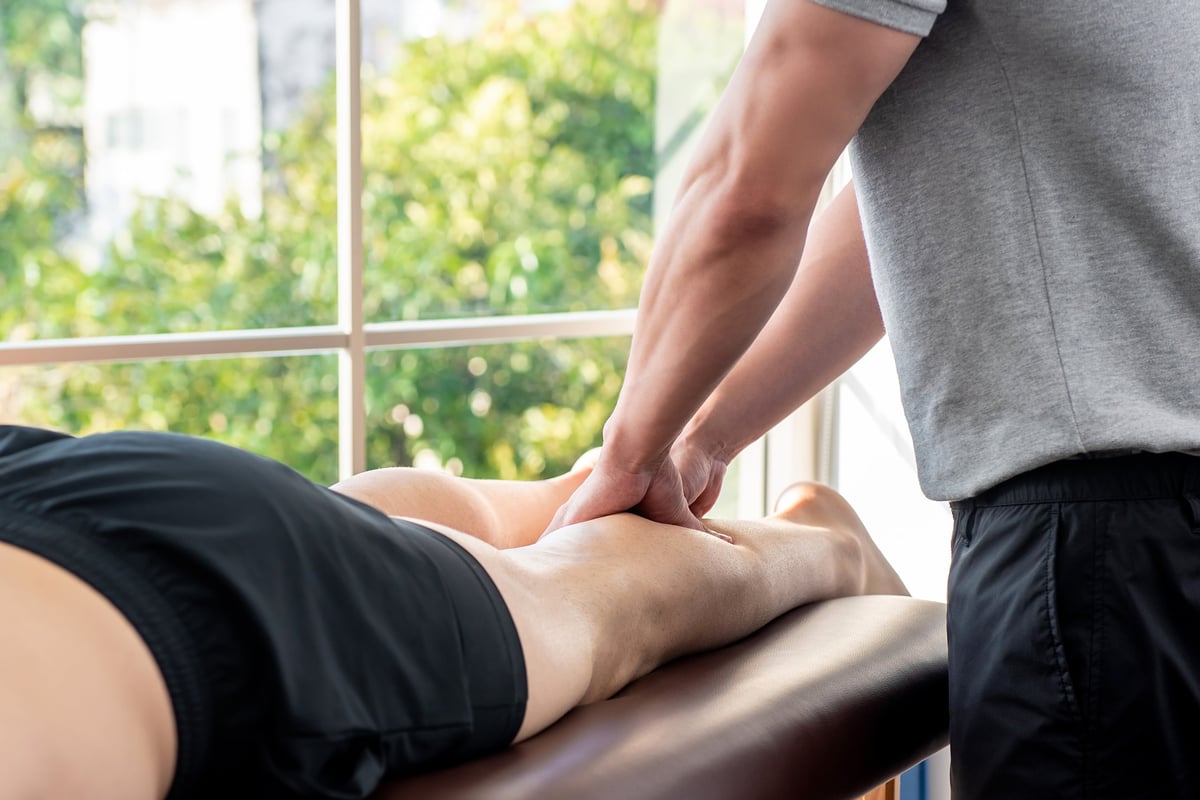
This is the half body treatment. Rather than covering everything, it concentrates on a single area, most often the back and shoulders, or one leg. Working this way means more time on the tissue that actually needs attention, and it is usually the better choice when you can point to where the problem is.
Sports massage is built around the demands you place on your body. If you are training for something, the work is shaped around your training week. If you are recovering from a specific strain, it is shaped around that. The techniques overlap with deep tissue work, but they are applied with a clearer goal in mind.
It is worth saying plainly: this is not only for athletes. A large share of the clients who book this treatment are office workers, drivers and people in trades. Sitting in the same position for eight hours, or driving for a living, loads the same muscles as a training programme does. The cause is different, the tightness is not.
The techniques
In plain English
Four techniques do most of the work here. None of them are complicated once the jargon is stripped away.
Deep frictions
Short, firm strokes applied across a small area, usually where a muscle or tendon is irritated. The point is to encourage the tissue to realign and settle, rather than to cover ground. It can be one of the more intense parts of a session, and it is often the part that makes the difference to a long standing niggle.
Muscle energy techniques
You are asked to gently contract the muscle being worked while the therapist resists, then relax. Because you are actively involved, the muscle releases further than it would with pressure alone. It is a cooperative technique, and it is especially useful where a joint or muscle has become guarded.
Myofascial release
Fascia is the connective tissue that wraps around muscle and holds it in place. When it tightens or sticks, it can pull on areas well away from where you actually feel the problem. This technique is slower and flatter, using sustained pressure to encourage that tissue to let go.
Soft tissue release
The muscle is held in a shortened position, pressure is applied to a specific point, and the muscle is then moved out of that position. It is a way of targeting one set of fibres without working across the whole muscle, and it is useful where a specific spot keeps referring tightness elsewhere.
When to book
Before, after or during
The same treatment does different jobs depending on where you are in your training.
Pre event
Booked in the days before a competition or a big session. The work is lighter and shorter than usual, aimed at making sure the muscles are ready to perform rather than tired out. Nothing new should be introduced this close to an event.
Post event
Booked in the days afterwards, once the worst of the soreness has passed. This is where the fuller work happens, helping to clear the tightness that builds up after a hard effort and to get you back to normal training sooner.
In season maintenance
The regular appointment that keeps small problems small. Most athletes and regular gym goers find that booking every few weeks means fewer flare ups and less time lost, because niggles are dealt with before they become injuries.

Not only for athletes
Your desk does the same thing to you
The word sports puts some people off, and it should not. Most of the clients who book this treatment do not compete in anything. What they have in common is that their body is asked to hold the same position, or repeat the same movement, over and over.
Sitting at a desk for eight hours puts a steady load through the neck, shoulders and lower back. Driving for a living does the same, with the added complication of a fixed position and vibration. Trades that involve lifting, bending or working overhead load the shoulders, back and hips in ways that accumulate quietly over years.
None of that is a sports injury, and it does not need to be treated like one. But the tightness it produces responds to exactly the same techniques, which is why this treatment works just as well for a driver with a locked up shoulder as it does for a runner with a tight hamstring.
This treatment suits
Who tends to book it
- Runners, cyclists and gym goers managing training load.
- Team sport players in and out of season.
- Office workers with neck, shoulder and lower back tightness.
- Drivers and trades whose working position never changes.
- Anyone with a specific area that will not settle on its own.
If you are not sure which treatment fits, the treatments page sets out all three side by side.
Before your appointment
The practical details
Price
- £45 for your first visit
- £35 for each follow up
Session length
- 45 to 50 minutes for a first visit
- 35 to 40 minutes on follow ups
- Half body, one focused area
What to wear
- Shorts and a t-shirt work well
- You stay covered throughout
What to bring
- Just yourself, everything is provided
- Bring details of any injury or training plan if useful
The first appointment
- Assessment first, before any work begins
- We discuss the area, your training and what you want from it
Your therapist
- Richard Clarke, Ryan Herbert or Jamie Stedman
- All three practise this treatment
What we treat with it
Conditions sports massage helps with
Sports massage works on one area at a time, which suits problems that are specific to where you load or hold tension. These are the conditions we most often treat with it.
Common questions
Sports massage, answered
How is sports massage different from deep tissue massage?
Sports massage is targeted rather than full body. It works on one focused area, matched to your training, competition or recovery, and uses techniques such as deep frictions, muscle energy techniques and soft tissue release. Deep tissue massage covers the whole body instead.
How long does a session last?
A first sports massage appointment runs for 45 to 50 minutes, and follow ups run for 35 to 40 minutes. Both cover a half body area, so one region gets the full attention.
Do I need to be an athlete?
No. Sports massage suits anyone with a specific problem in one area, whether that comes from sport, the gym, a physical job or simply being on your feet all day. You do not need to compete to benefit from it.
Should I book before or after training or competition?
It depends what you want from the session. Many people find a treatment in the days before a race or a match useful for freshening up, while others prefer it after a hard block to help recovery. Tell us what you are training for and when it falls, and we will work around it.
What should I wear?
Comfortable clothing you can move in. You will be asked to undress to your underwear for treatment, and you are covered with towels throughout. Only the area being worked on is uncovered.
How do I book?
Call 07971 742797 or send an enquiry through the form on this page. There is no online booking at the moment. If the call is not answered, please leave a message, we are often mid session and will return your call.
What happens if I need to cancel or arrive late?
We ask for at least 24 hours notice to cancel or rearrange. If you arrive late we will still see you, but the appointment may need to finish at its original time so the next client is not kept waiting, and the full fee still applies if the session has to be shortened or cannot go ahead.
How do I pay?
Payment is taken at the time of your appointment. We accept cash, card and bank transfer. New clients need to pay in advance before a first appointment.
Ready to book your session?
Choose a time that suits you, or call us and we will find one that works.